

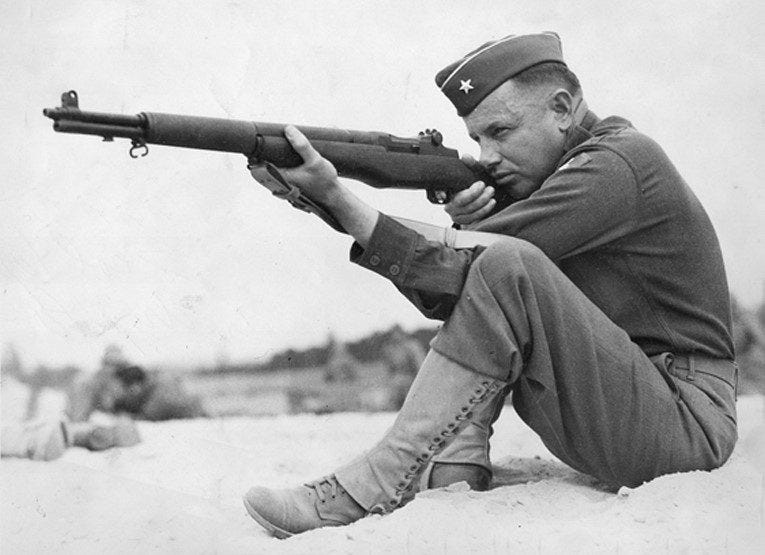
“In my opinion, the M-1 Rifle is the greatest battle implement ever devised.”
-General George S Patton
From the blood-soaked beaches of Normandy, through the choking jungles and coral atolls of the Pacific, and across the frozen ridges of Korea, American infantrymen carried a rifle that fundamentally altered modern combat: the M1 Garand. Semi-automatic and chambered in the powerful .30-06 Springfield cartridge, it delivered accurate, sustained fire as fast as a GI could pull its trigger, giving American soldiers the decisive edge in firepower that saw the United States sweep enemies aside on two continents.
While the armies of Germany, Japan, and most other nations still relied on manually operated bolt-actions, the United States ushered in the next era of infantry combat: the first standard-issue, semi-automatic rifle in the hands of a major power. In the hands of its Greatest Generation, the Garand allowed American riflemen to suppress, maneuver on, and dominate enemies in ways they could not effectively counter. This leap in infantry firepower, born of American ingenuity, helped turn the tide in countless engagements and gave a generation of American men the tool to win wars the world over.
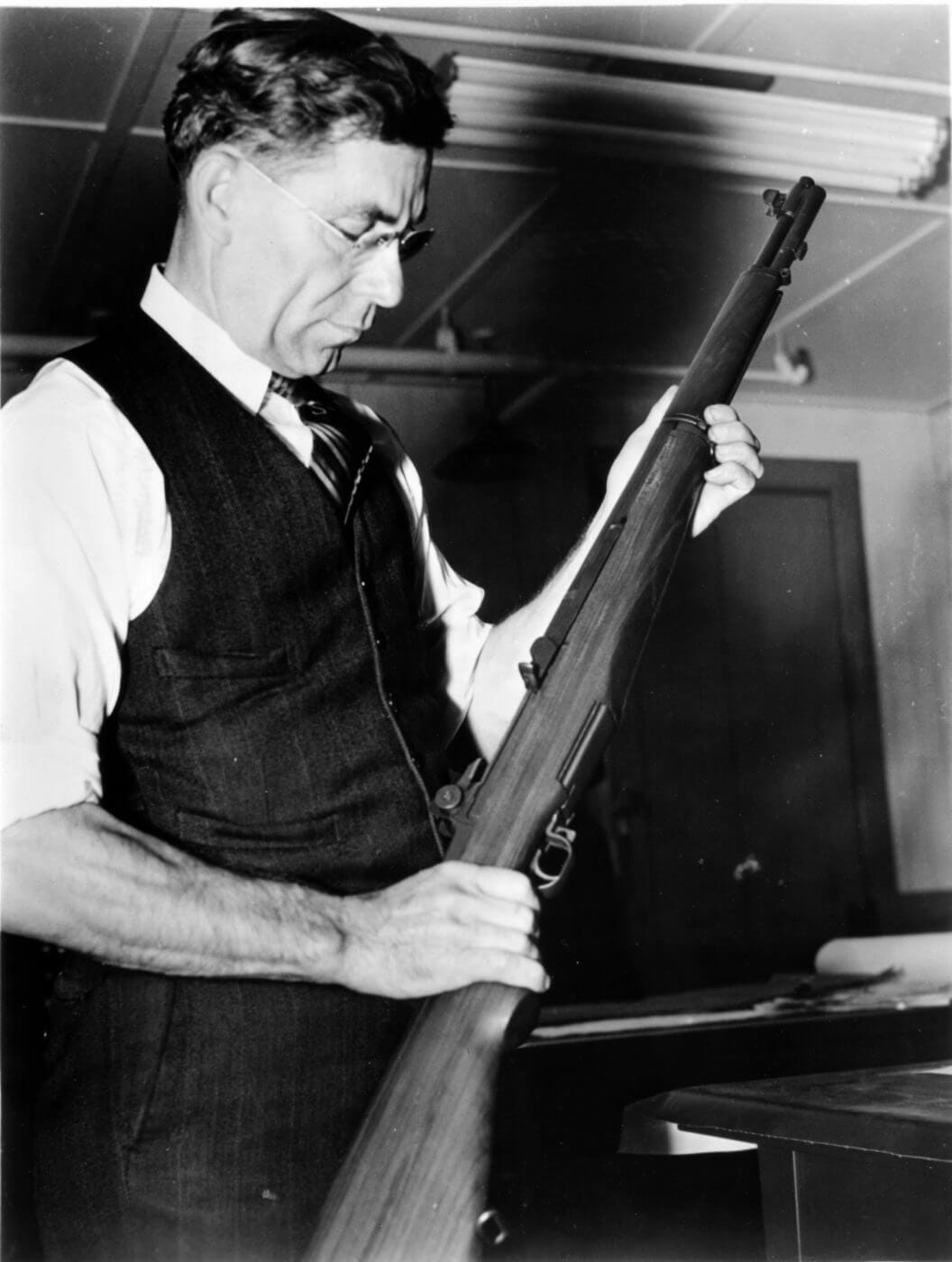
The story of the M1 Garand starts with the birth of its designer on New Year’s Day, 1888, in Quebec, Canada. One of 12 children, John Garand moved to Connecticut following the unfortunate death of his mother in 1899, dropping out of school in the third grade to work in a textile mill. His interest in firearms was spurred after working at a shooting gallery in his early years. John would spend the next years of his life working in machine shops in New York and Rhode Island as a tool maker and machinist before becoming a naturalized citizen in 1920.
John entered a design for a light machine gun for the United States Army in 1917, with his design eventually being selected and John given a job as an engineer at the Springfield Armory in Springfield, Massachusetts. Here, Garand was tasked with the development of a self-loading rifle to replace the Army’s bolt-action 1903 Springfield rifles, spending the next decade and a half developing and refining the design that would become the M1 Garand rifle.
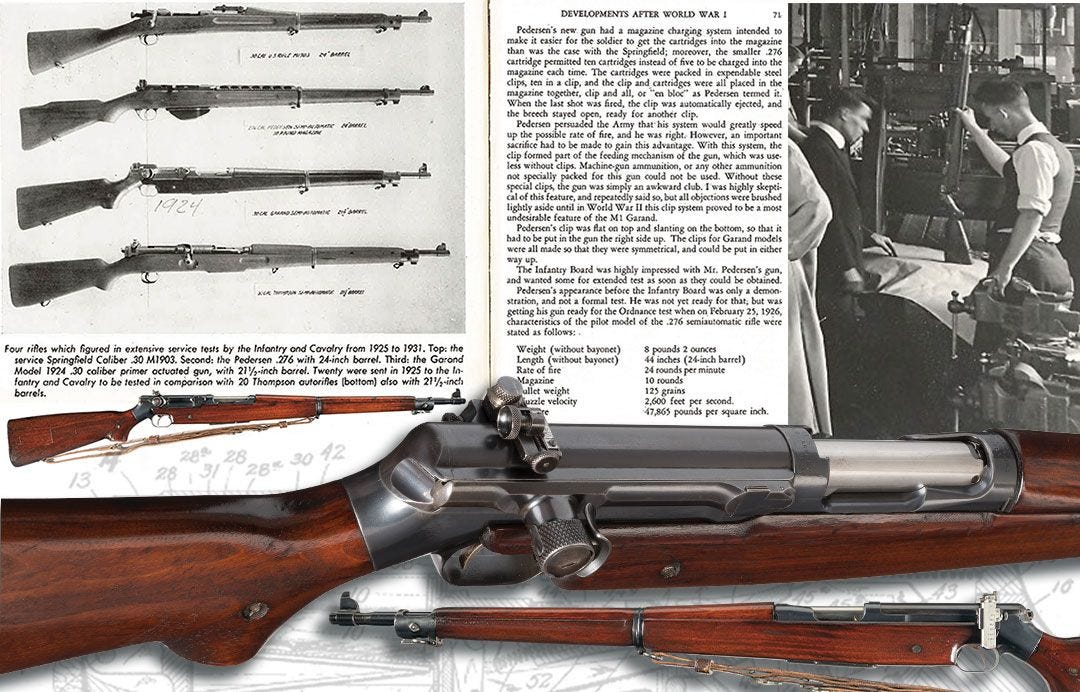
Garand began development on his semi-automatic rifle with primer-actuated blowback designs in the early 1920s, starting with the Model 1919 that built on his original light machine gun entry for the War Department. Further prototypes included the M1922s that were tested against models from Thompson, Pederson, and Berthier, leading to the improved M1924 model selected by the US Army Ordnance Board for further development.
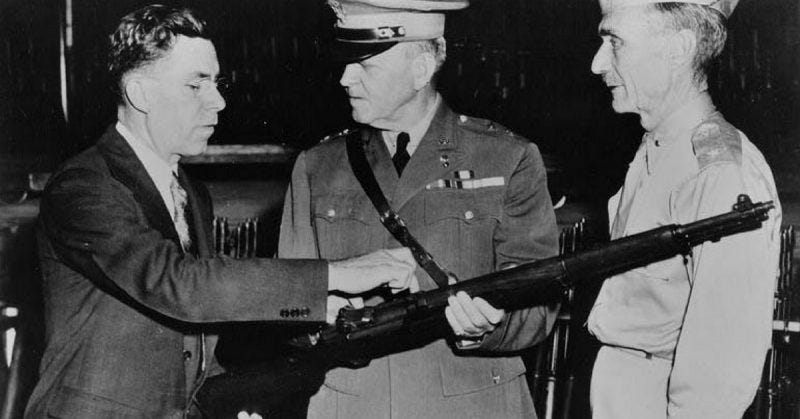
Early versions of Garand’s rifles were chambered in the experimental .276 Pedersen cartridge, an experimental 7mm cartridge designed to be a lighter and lower-recoil round that was ultimately not adopted. Years of experimentation with the 7mm Pederson round and various other intermediate cartridges, including the .30 Thompson, .256 Bang, and Garand’s own .30 Garand, led the Army towards adopting the .276 Pederson. In 1932, however, Army Chief of Staff General Douglas MacArthur ordered all intermediate caliber research suspended and that all future rifles be developed in the standard high-power .30-06 Springfield round. Garand redesigned his rifle accordingly, producing a .30 caliber variant in 1933 called the M1. The U.S. Army officially adopted the new rifle on January 9, 1936, as the U.S. Rifle, Caliber .30, M1.
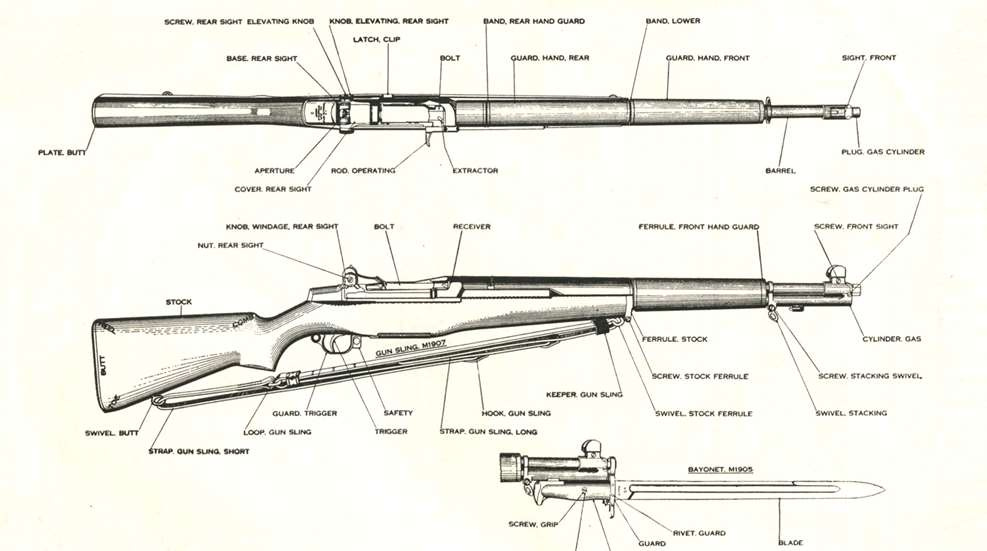
The M1 Garand is a gas-operated, rotating-bolt semi-automatic rifle chambered in .30-06 Springfield. It measures 43.5 inches in overall length with a 24-inch barrel and 1 in 10-inch rifling. Unloaded, the rifle weighs approximately 9.5 pounds. When equipped with a full eight-round en bloc clip, sling, and bayonet, that weight becomes closer to 11 pounds. Muzzle velocity with standard 150-grain M2 ball ammunition is approximately 2,800 feet per second. The rifle features an aperture rear sight and front sight post, with trained operators achieving a practical rate of fire of 40–50 aimed rounds per minute. It can be additionally fitted with the M7 rifle grenade launcher.
The M1 Garand features an internal fixed box magazine with a capacity of eight rounds, loaded via a stamped metal en bloc clip. To load, the bolt is locked to the rear, and the clip is inserted from the top of the receiver into the magazine well. Once seated, the bolt handle is released and the operating rod slams forward, chambering the first round. As each round fires, cartridges are stripped from the en bloc clip until after the eighth round, the empty clip is automatically ejected upward with a distinct metallic ping, and the bolt locks open.
The ejection sound of the Garand, the illustrious “ping,” has spawned something of a legend in its own right. The myth holds that this sound alerted enemy soldiers whenever American riflemen ran empty, allowing them to get the jump on the GIs. This myth, however, fails to stand up to history, with no documented cases of American soldiers being killed as a result of the clip ejection sound. Some accounts do indicate, however, that soldiers occasionally tossed empty clips to deliberately draw enemy fire. Take that as you will…
I cannot go without mentioning the other legend of the Garand, one that has bitten me on an occasion or two. “Garand thumb” refers to an extremely painful injury that can occur when the operator’s thumb is caught by the closing bolt during reloading, being crushed against the receiver by the rapidly closing bolt of the rifle. This risk is reduced through proper loading technique or by using full clips, and a small accessory known as the Holbrook Device was later developed to help mitigate the issue, though it remains a persistent issue with many Garands. In many ways, getting Garand Thumb is a rite of passage for a shooter, and in many ways it is the mark of a re—uh—fool.
Relative to contemporary bolt-action rifles such as the German Mauser K98, Japanese Arisaka, and even the rapid-fire British Lee-Enfields, the M1 Garand provided a significantly higher practical rate of fire. Trained soldiers could reliably deliver 40–50 aimed shots per minute, compared to 10–15 for most bolt-action rifles. Even the British “mad minute” tactic could not keep up with the semi-automatic Garand. The .30-06 cartridge offered an effective range of approximately 500 yards against point targets, with skilled marksmen capable of hits at much greater distances.
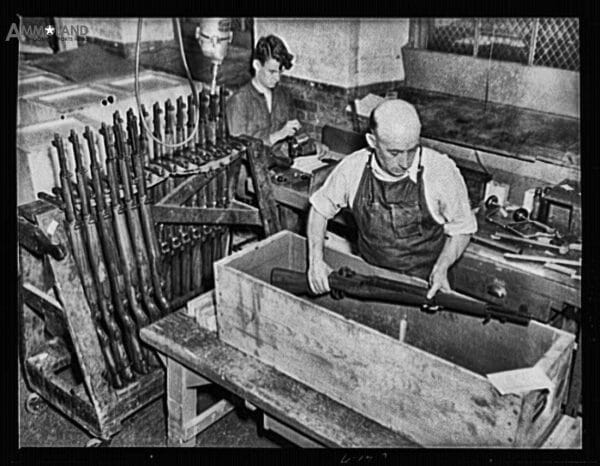
Initial production at Springfield Armory proceeded slowly. The first production-standard M1 rifles passed proofing and function tests in mid-1937, and by January 1940, daily output had only reached around 100 rifles. As the United States mobilized for war, production rates rose sharply, with peak monthly output at Springfield Armory rising to 122,000 rifles in January 1944, roughly 3,936 rifles per day or 164 rifles per hour. By the end of World War II, Springfield Armory had produced more than 3.5 million M1 rifles, and including output from Winchester, International Harvester, and others, total U.S. production exceeded 6 million rifles. Many of these underwent multiple rebuilds at ordnance depots, extending their service lives.
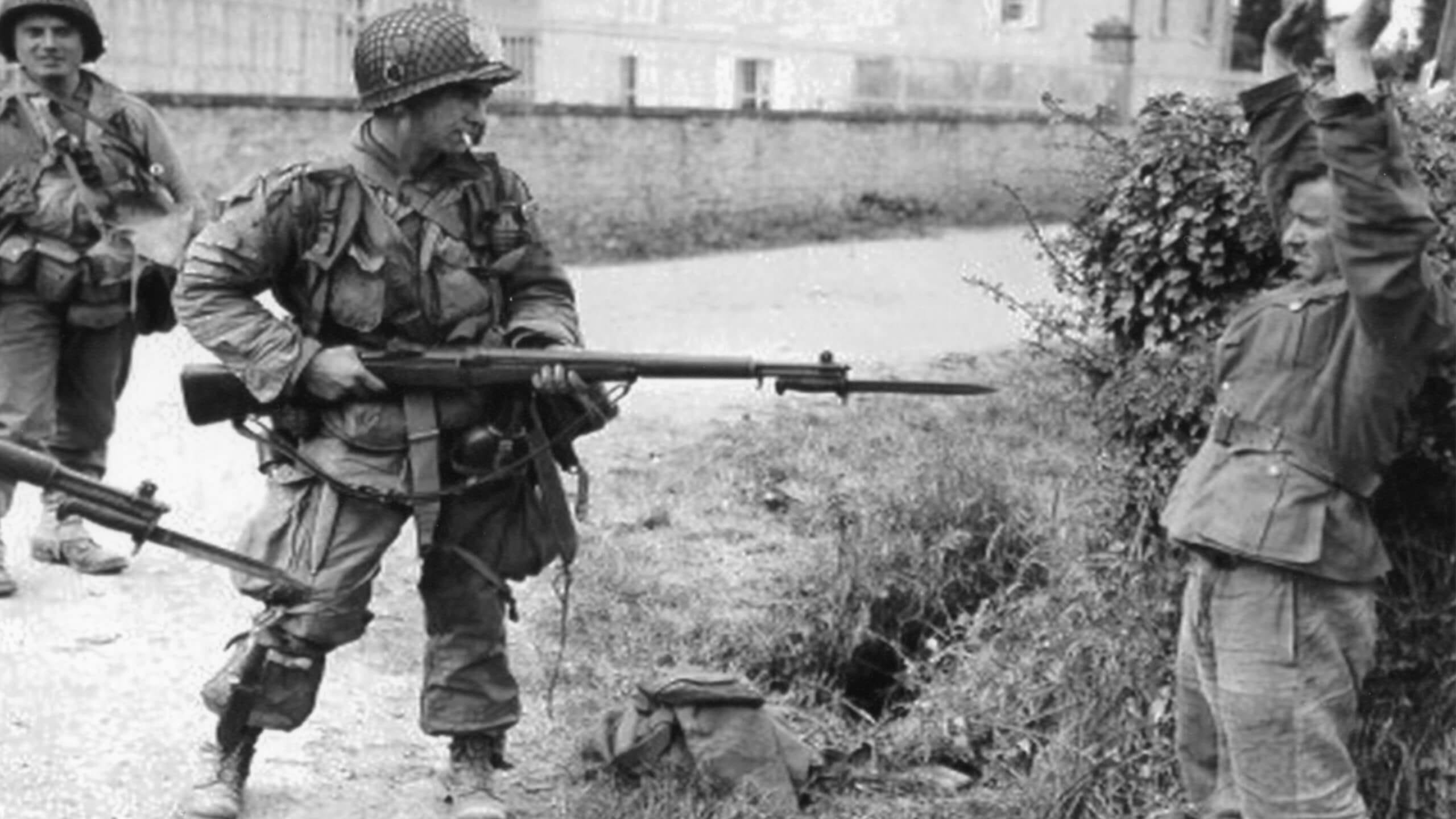
American GIs first deployed the M1 Garand in major combat during World War II. It equipped infantry units across all theaters, including the Normandy landings, the hedgerow fighting in northern France, jungle and island-hopping campaigns across the Pacific, and the drive into Germany.
The semi-automatic action allowed American riflemen to deliver a higher relative rate of sustained fire while advancing or maneuvering, an advantage that bolt-action-equipped enemy forces struggled to match. German after-action reports noted the high volume of rifle fire from U.S. squads, at times exceeding that of comparable German units despite fewer supporting automatic weapons on the American side. Japanese forces encountered similar effects, particularly when facing rapid semi-automatic fire during massed attacks. In close-range engagements and defensive actions against Japanese banzai charges, the Garand’s rate of fire proved highly effective at inflicting casualties and disrupting assaults.
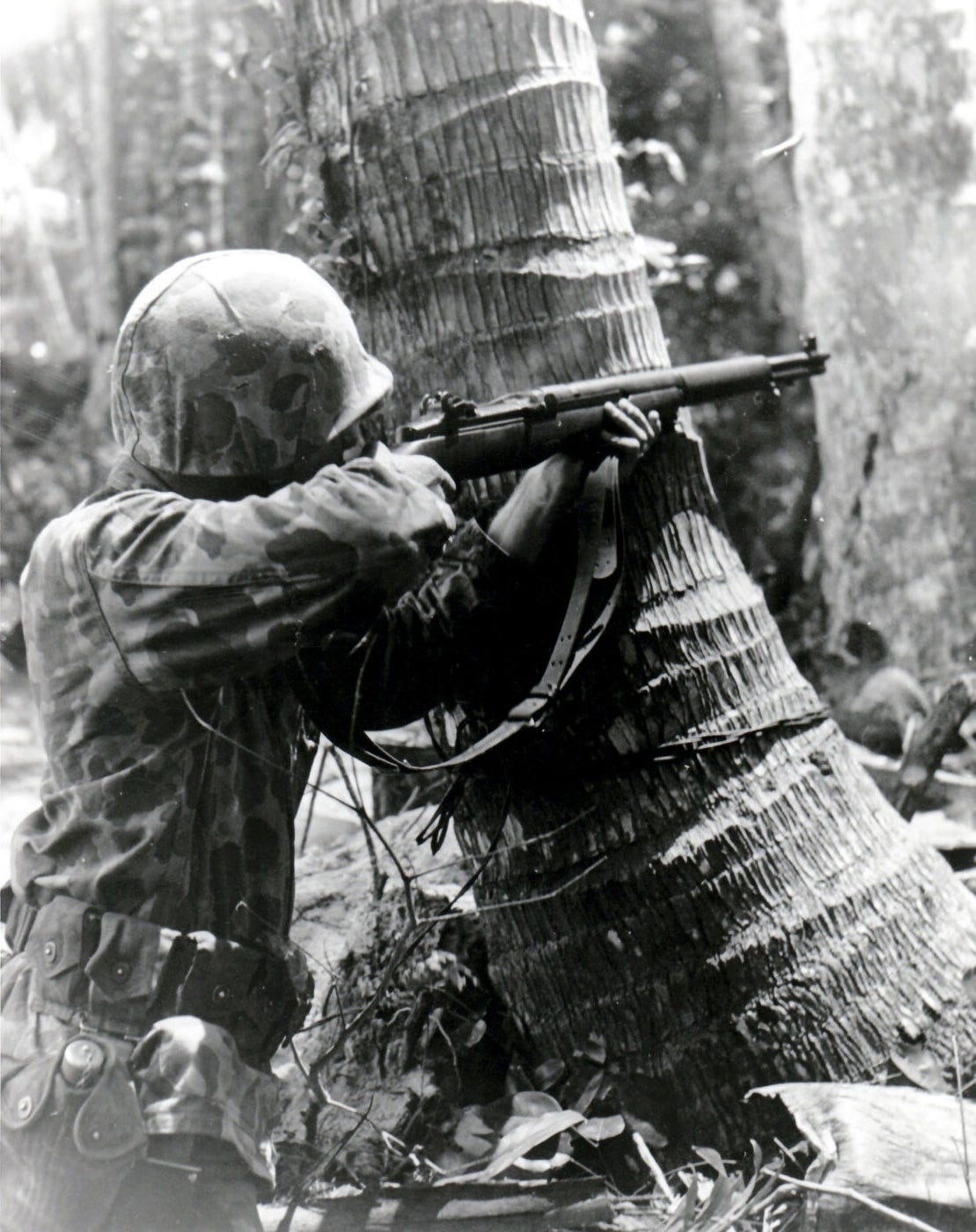
The action of the Garand demonstrated high reliability in harsh combat environments, functioning effectively in the mud of northwest Europe, the sand of North Africa and Pacific islands, and the extreme cold of winter campaigns. Its combination of power and accuracy contributed to the ability of American forces to engage and defeat numerically superior enemy forces or determined opposition.
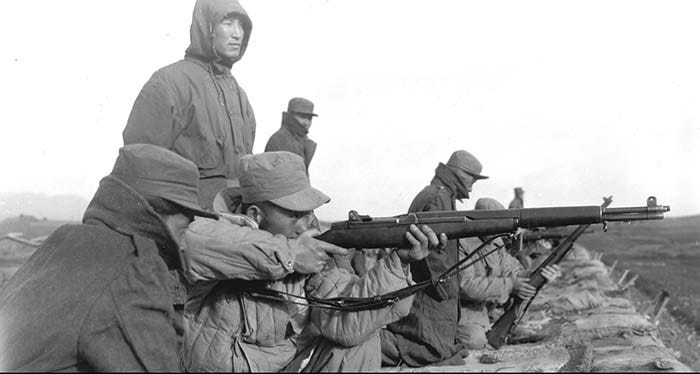
During the Korean War of the early 1950s, the M1 Garand remained the standard U.S. infantry rifle, performing adequately in the mountainous terrain and extreme cold conditions encountered on the peninsula. The Korean conflict, however, underscored the need for lighter weapons in many infantry roles, leading to continued widespread use of the M1 Carbine alongside the Garand. Sniper variants of the M1, particularly the M1C and M1D, saw increased employment during the war. Limited numbers of the rifles remained in U.S. service into the early years of the Vietnam conflict and saw widespread usage by partner forces, Vietnam, Korea, and allied nations throughout the Cold War. By the late 1950s, the M14 rifle had begun replacing the Garand as the primary American infantry weapon, before itself being replaced by the M16 in the 1960s.
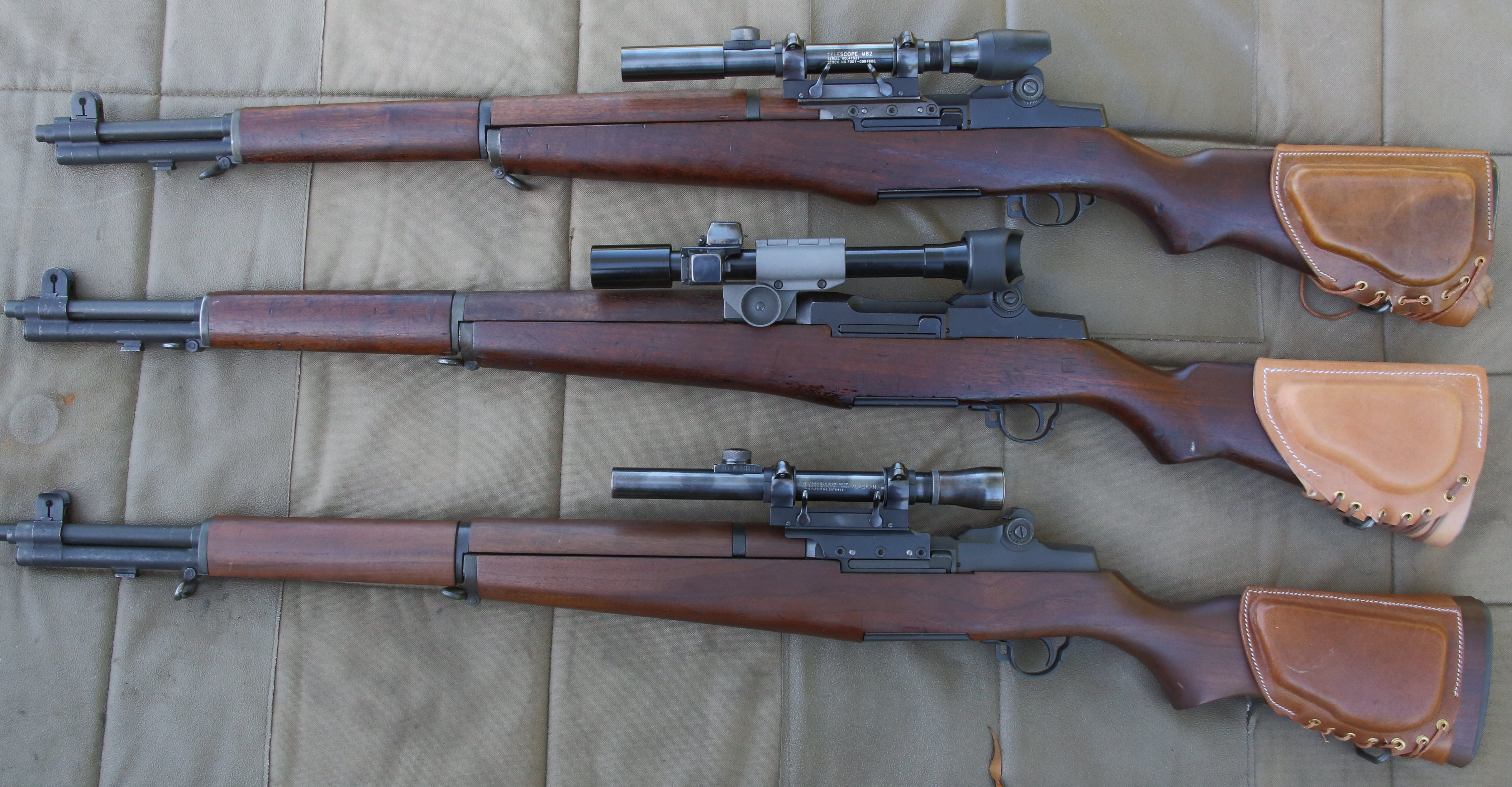
While the standard infantry M1 accounted for the vast majority of production, several specialized variants were developed. The M1C, formerly the M1E7, was adopted in June 1944 as the primary sniper configuration for the rifle, featuring a Griffin & Howe scope mount attached to the left side of the receiver alongside a cheek pad. Approximately 7,971 M1C rifles were produced during World War II, with additional units manufactured during the Korean War. The M1D, the former M1E8, was designed by John Garand with a simpler barrel-mounted scope base and was adopted in September 1944 as the standard American sniper rifle alongside the earlier bolt-action M1903A4. Over 21,000 M1D rifles were manufactured postwar, and they saw service through the early part of the Cold War and could be found in some niche purposes as late as the Persian Gulf War.
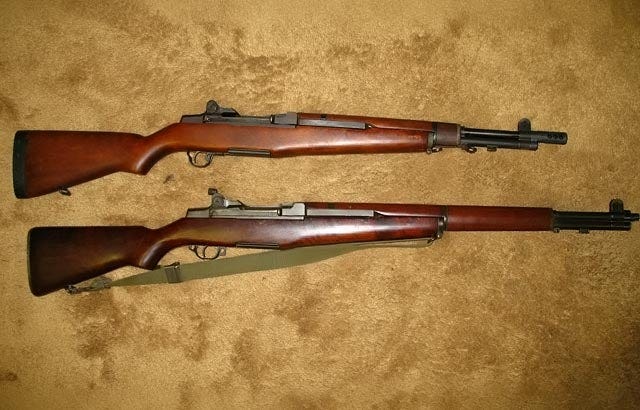
Other experimental or limited-production variants included various short-barreled “tanker” models, frequently created via field modifications, selective-fire T20 prototypes, and various test configurations chambered in alternative calibers or equipped with different magazine systems. None of these variants was adopted or produced in quantities sufficient to supplement or replace the standard M1 Garand in any substantial numbers.
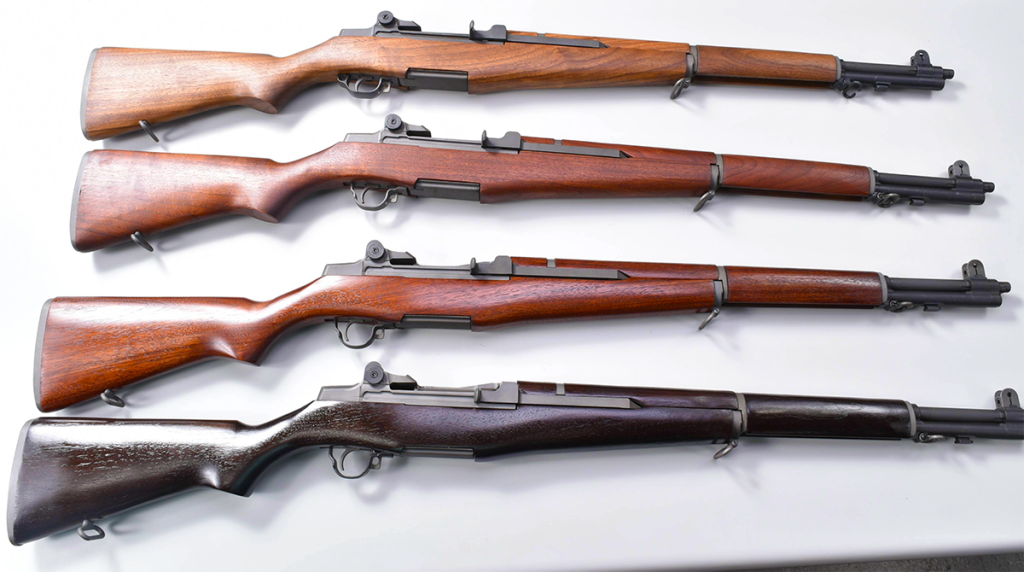
Following its military service, hundreds of thousands of surplus M1 Garands flooded the civilian market. The Civilian Marksmanship Program, a federally chartered organization dedicated to promoting marksmanship, has sold many thousands of these rifles to American citizens for target shooting, collecting, and historical preservation. In recent years, the CMP has also offered new production Garands built to original specifications in both .30-06 Springfield and .308 Winchester, ensuring the rifle remains incredibly popular in the civilian shooting world even as more modern platforms overshadow it.

Today, the M1 Garand is used in high-power rifle competitions, hunting where legal and with appropriate loads, and for historical reenactment. The rifles are often centerpieces in collections, a testament to American firepower and ingenuity. With quality ammunition, it commonly achieves a consistent 2 MOA accuracy and can easily be accurized far beyond this standard. The distinctive metallic PING of the en bloc clip ejection remains a recognizable feature at shooting ranges, and a sort of animal call for attracting range fudds…
The M1 Garand represents practical American firearms engineering, emphasizing reliability, robust construction, and improved infantry firepower. The design was neither complex nor innovative in appearance, but it proved effective and durable under combat conditions.
The M1 Garand is a prime example of practical American firearms engineering, emphasizing reliability, robustness, and firepower. Neither especially complex nor outwardly innovative, it proved exceptionally effective and durable in combat, serving as the standard American infantry rifle throughout World War II and Korea. After its distinguished military career, large numbers of surplus Garands entered civilian hands via the Civilian Marksmanship Program, where the rifle continues to be cherished today for competitive shooting and historical preservation. To this day, the M1 Garand endures as a true American legend; carried through two wars, it defined a generation, and the legendary PING rings out on ranges around the country to this day.
Let me know your favorite Garand stories in the comments below, and make sure to like, restack, and subscribe to J. H. Rhodes for more American Guns!
In the film Battleground, the GIs regain their spirit after retreating and hiding. They can hear the Germans advancing. One soldier decides to fight, shooting his M1 into the fog, changing aim by a few degrees each shot. A wounded German cries out. This inspires the rest of the group to come out of hiding and fight.
It's a very good movie, 1948, most actors were veterans. Much better than the latter Battle of the Bulge.
Both my Grandpa's served in WW2. One was at Normandy, 3rd wave. The other in the Pacific. Both survived. Since my pre-teens I had wanted a Garand (68 now). Finally picked one up from Fulton Armory. About 10 yrs ago. All parts original manufacture but put into long term storage and taken out for my build. 1944 Springfield receiver. Parts from the same year. Fulton put on a Criterion barrel and a brand new walnut stock - all to specs. The rifle, for all intents and purposes is brand new. My prized possession. I love the Garand and every time I go to the range, someone will come up to look. I always let them shoot it. Big smiles on their faces.