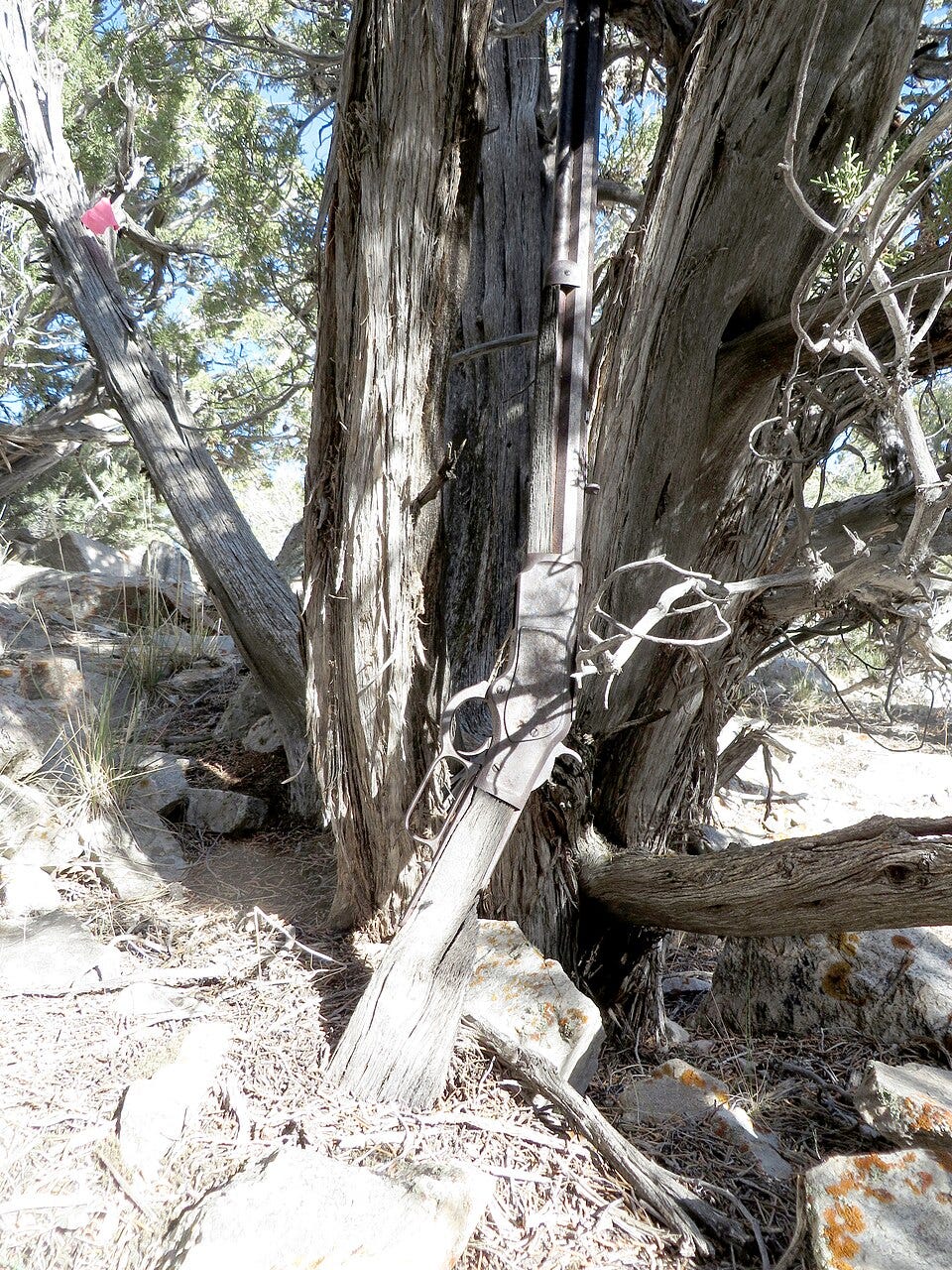
“This is the story of the Winchester Rifle Model 1873, "The gun that won the West." To cowman, outlaw, peace officer, or soldier, the Winchester '73 was a treasured possession. An Indian would sell his soul to own one.”
The Winchester Model 1873 lever-action repeater is the quintessential American Rifle. Introduced in 1873, the same year as Colt’s Single Action Army, the rifle quickly became the most popular weapon of the American Frontier, earning the title: “The Gun that Won the West.” In its 50-year run from 1873 to 1923, over 720,000 were produced, and the weapon could be found in every corner of the globe. From cowboys to lawmen, Indians and Turks, all the way to Boer commandos, this rifle defined its era.
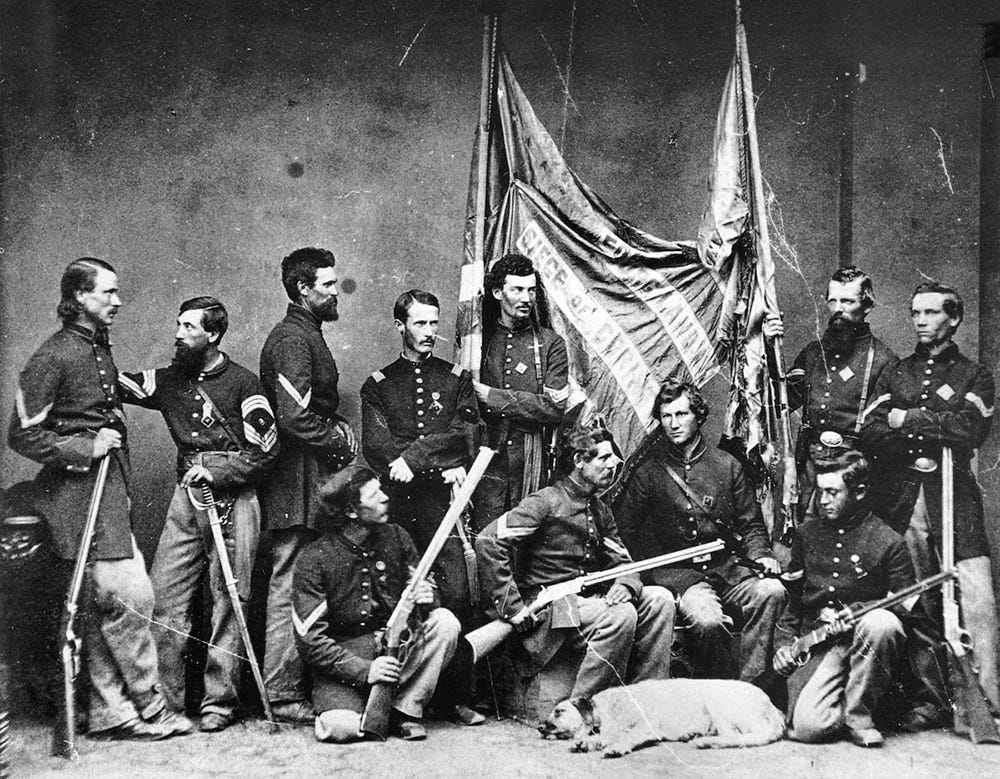
The Winchester 1873 traces its lineage to the designs of Benjamin Tyler Henry and his 1860 Henry rifle, itself an improvement on earlier Volcanic designs. The Henry rifle, with its toggle lock mechanism, lever action, and 16-round tubular magazine, was the first true lever-action rifle and saw service in the American Civil War and later Indian Wars. Under the leadership of Oliver Winchester’s New Haven Arms Company, the rifle was developed into the 1866 Model, called the “Yellow Boy” for its brass receiver. Firing the same .44 Henry rim-fire cartridge as its predecessor, the 1866 introduced the side loading gate, replacing the front loading magazine tube of the Henry rifle.
Winchester engineers continued development work on the rifle, introducing a steel receiver and eliminating the open-top design of previous rifles. These advancements, combined with a refined toggle-lock mechanism and center-fire design, created a rugged rifle that was perfect for the American Frontier. Chambered in the new.44-40 Winchester Center Fire round firing a 200 grain bullet at 1,250 fps, the rifle delivered devastating fire out to medium range. Later rifles were also offered in .38-40 and .32-20.
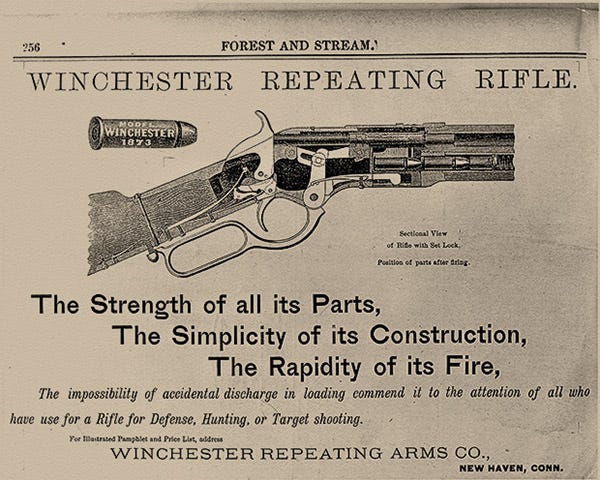
The 1873’s action relied on a toggle-link mechanism with a lever that functioned as a pivoting linkage to extract the spent cartridge, cock the hammer, and feed a fresh round from the tubular magazine into the chamber. This design permitted a significantly higher rate of fire compared to contemporary single-shot rifles. The side-loading gate, patented by Nelson King, enabled simple, rapid reloading, ideal for mounted warfare or quickly topping off the magazine in a gunfight. Early models featured iron frames, which were replaced with steel construction in the mid-1880s for better strength and durability, with case-hardening becoming more popular over time. Weighing around 8-9 pounds unloaded, the rifle balanced perfectly, making it especially easy to handle on horseback or in the brush.
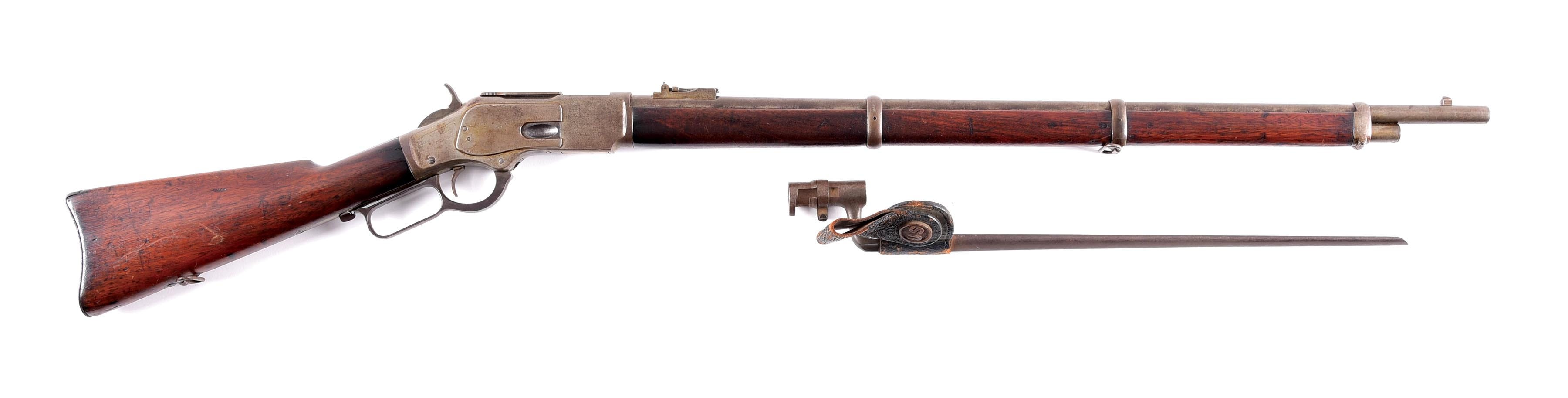
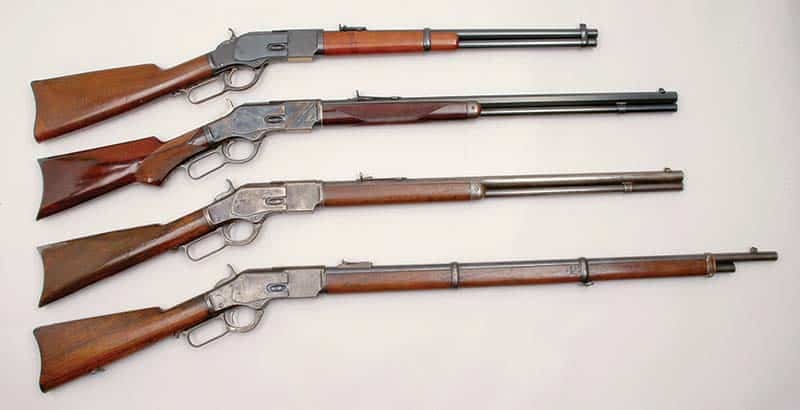
Variants of the rifle were made for every need: the standard rifle featured a 24-inch octagonal barrel suited for accurate shooting at range, a carbine with its 20-inch barrel designed for carry on the saddle, and the much less common 30-inch musket model marketed for military use. The rifles were highly customizable with a massive aftermarket for upgrades such as half-octagon barrels, checkering, partial pistol grips, butt plates, and even take-down models to break the rifle down into two pieces. In the dust and grit of the frontier, the closed-top receiver kept debris out, ensuring reliability when lesser guns failed.
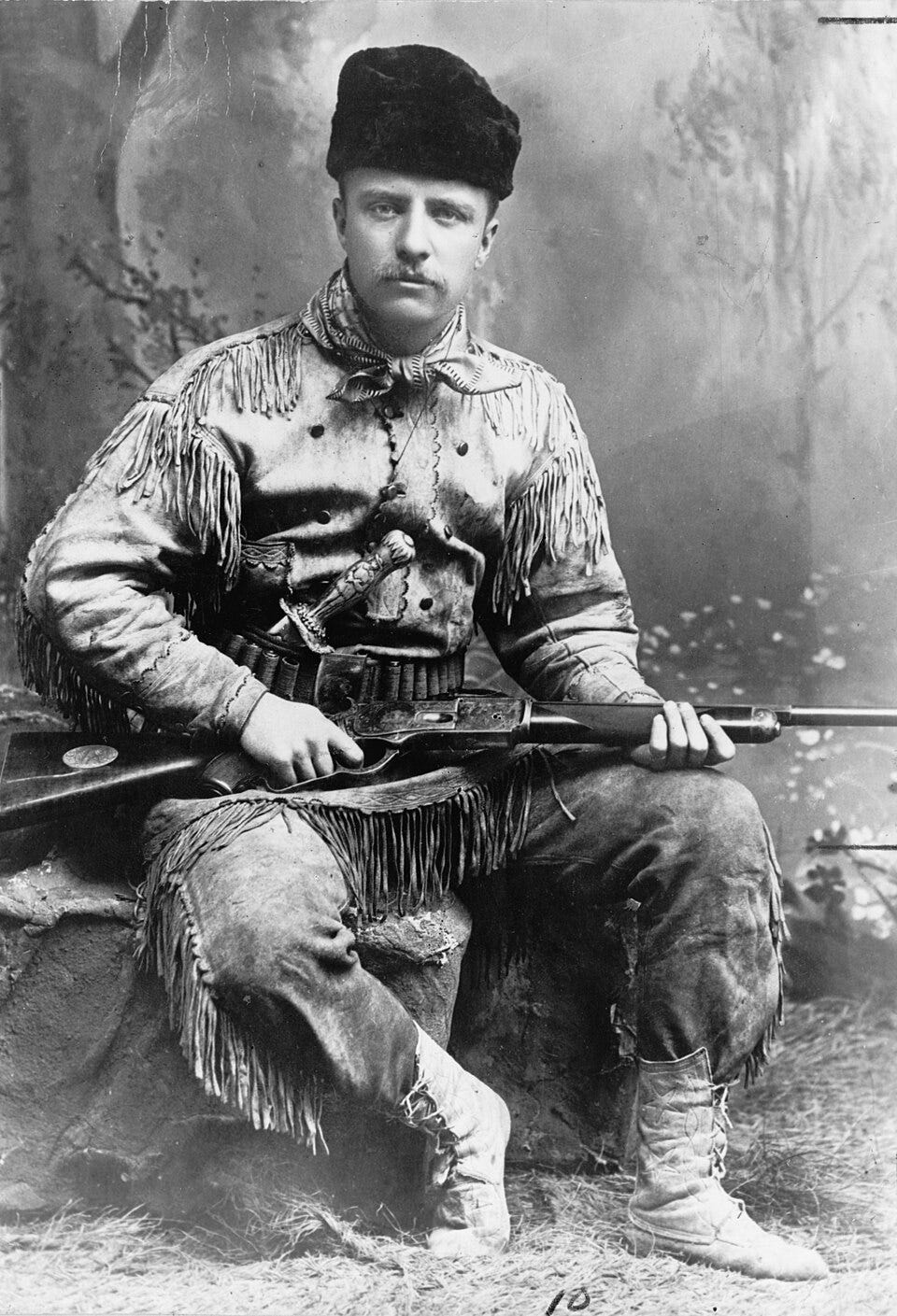
The success of the Winchester Model 1873 led directly to the expansion of Winchester’s lever-action offerings. In 1876, the company introduced the Model 1876, also known as the Centennial Rifle, which was a larger and more robust version chambered for more powerful cartridges such as the .45-75 and .50-95 Express. These chamberings were suitable for hunting large game, especially buffalo and grizzlies. The Model 1876 was developed to compete with the heavy single-shot rifles of the period, like the Sharps rifles and Remington rolling blocks. It used the same toggle-link design of the 1873 but was built with a stronger frame to handle full-powered rounds, although the design still struggled with the hottest loads and chamberings. Production continued until 1897, with a total of approximately 64,000 units manufactured, gaining notable favor with celebrities and big game hunters of the time, including Theodore Roosevelt, who used one extensively during his time ranching in the Dakota Badlands in the 1880s.
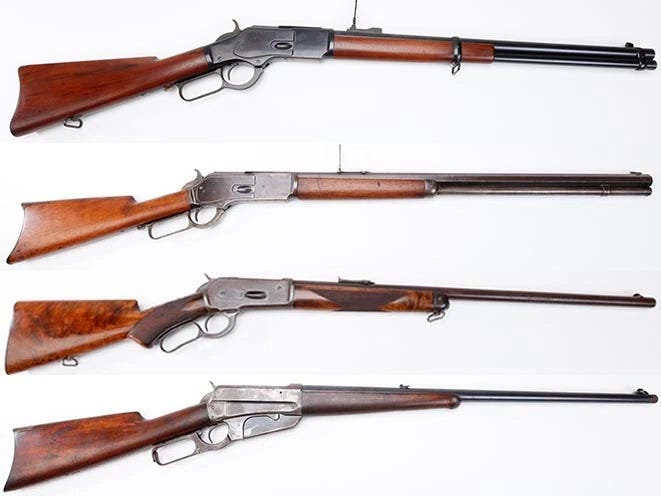
John Moses Browning became involved with Winchester in the 1880s and transformed its lever-action designs. His Model 1886 replaced the legacy toggle-link action with a stronger vertical locking block, capable of firing cartridges such as the .45-70 and .50-110 without issue. Production of the Model 1886 continued until 1935, with approximately 160,000 units made in total, serving as the bridge to the smokeless-powder era. The Model 1892 featured Browning’s new action in a smaller, lighter rifle chambered in the same calibers as the original 1873, like the .44-40. The Model 1892 functioned as a direct successor to the 1873 with smoother operation and an updated action. The original Winchester production of this rifle reached over a million units. The Model 1894 marked Winchester’s first rifle designed specifically for smokeless powder (and first major smokeless powder rifle on the civilian market), chambered in the new.30-30 Winchester, selling over seven million units and becoming the most popular civilian hunting rifle of all time. Finally, the Model 1895 introduced a box magazine to accommodate spitzer pointed bullets in modern rifle calibers, seeing service as a contract rifle in conflicts including World War I with the Russian Army in their 7.62x54R cartridge and becoming a popular hunting rifle in the US post-war (re-chambered to .30-06).
Among the rarest variants, Winchester’s “One of One Thousand” grade rifles were the highest level of precision and craftsmanship in the Model 1873 line. Introduced in 1875 as a promotional effort, these rifles sported barrels selected from batches for their exceptional build quality and accuracy, typically capable of producing groups under one inch at 100 yards during factory testing. The One of One Thousand sold for $100 (more than $2,500 today), compared to around $27 for a standard 1873 rifle, and included such features as double set triggers, checkered stocks, fancy engraving or extra finish, and “One of One Thousand” etched onto the barrels. The program was discontinued in 1877 due to limited demand, with only around 132-136 of the rifles sold. Authentic pieces command high prices at auction today, often selling for tens or hundreds of thousands of dollars depending on condition and documentation.
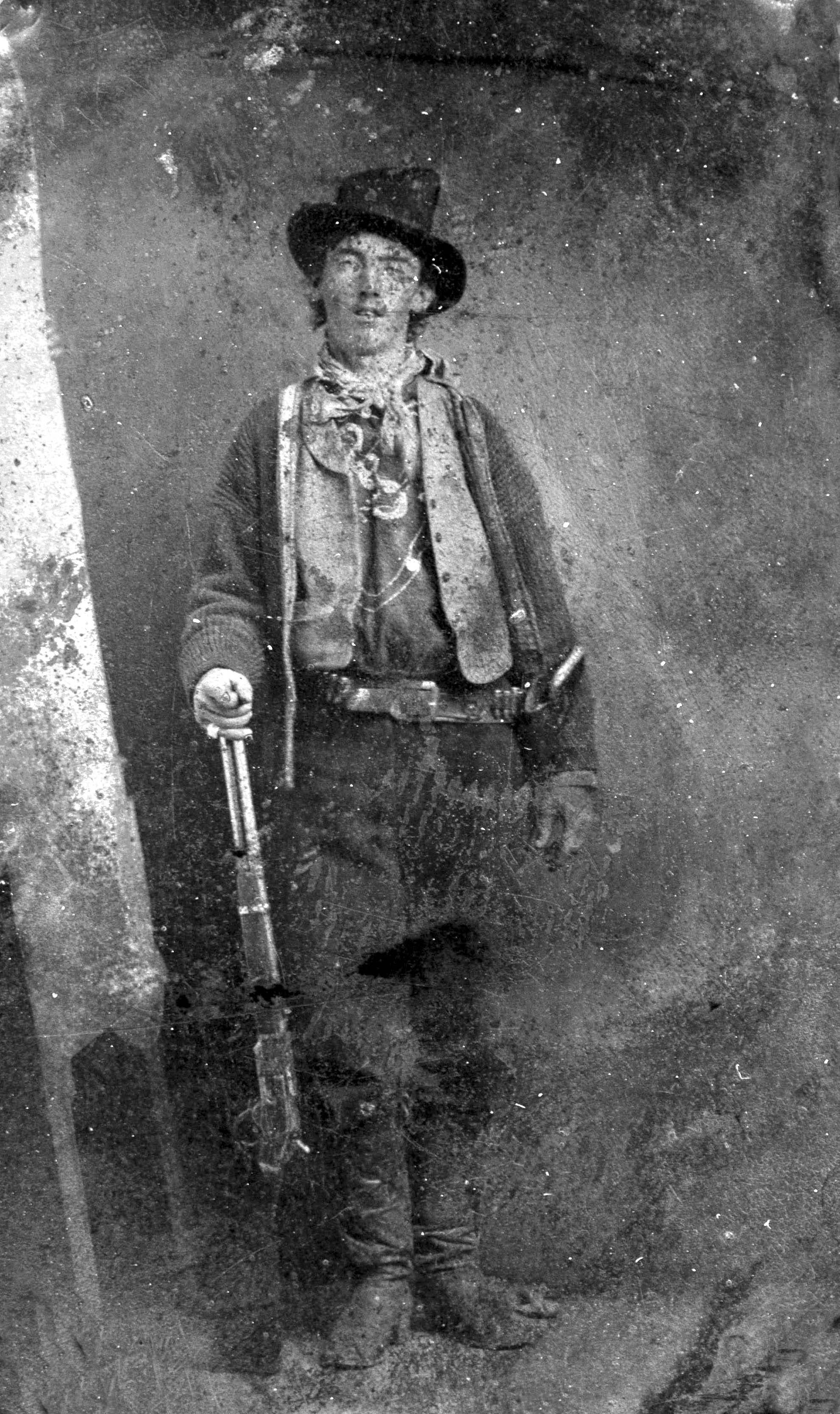
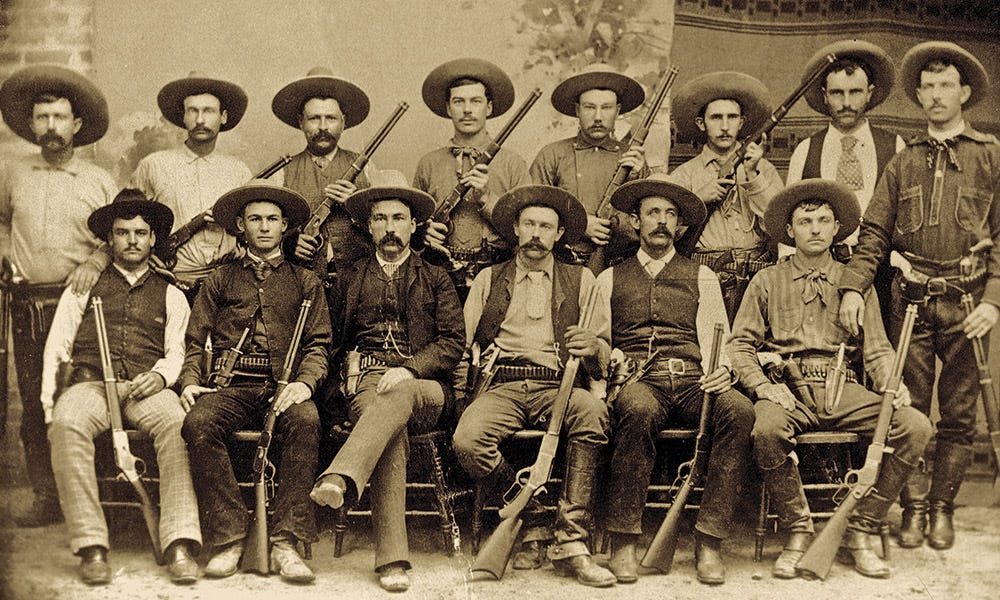
The Winchester rifle saw extensive service on the American frontier. Outlaws and lawmen valued its rapid fire and reliability. In the only official photograph of Billy the Kid, he is shown holding a Winchester Model 1873 carbine variant, and he reportedly used one during his escape from the Lincoln County Courthouse in 1881. Frank James carried a Model 1873 alongside his Remington 1875 revolver, both chambered in the ubiquitous .44-40 cartridge. Members of the Wild Bunch, including Butch Cassidy, also carried Winchester lever rifles on their robberies. During the Dalton Gang’s attempted double bank robbery in Coffeyville, Kansas, in 1892, locals armed with Winchester rifles repelled the attack, resulting in the deaths of four gang members.
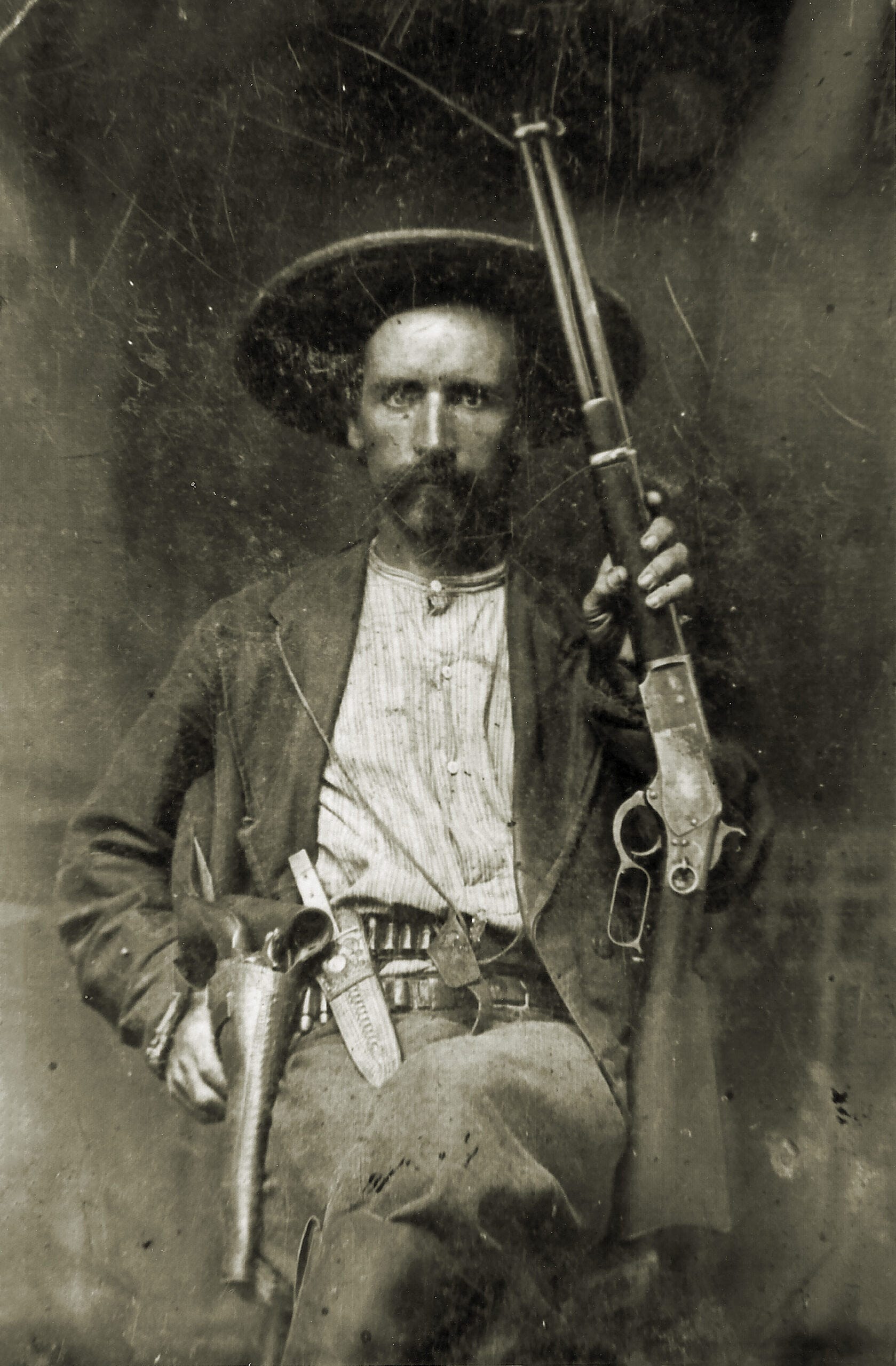
Lawmen also adopted the rifles in droves. The Texas Rangers incorporated saddle-ring carbine models after 1874 for frontier patrols and border duties; men like John Slaughter and J.B. Gillett acquired them personally for their work. Wyatt Earp and Pat Garrett employed the Model 1873 in many gunfights, relying on its rapid follow-up shots to gun down outlaws on the frontier. In the Arizona boom towns, sheriffs used the Winchester to maintain the peace. Even Buffalo Bill Cody featured the rifle prominently in his Wild West shows, calling it “The Boss” while demonstrating it to audiences, cementing the rifle as a legend of the West in the public’s eye.
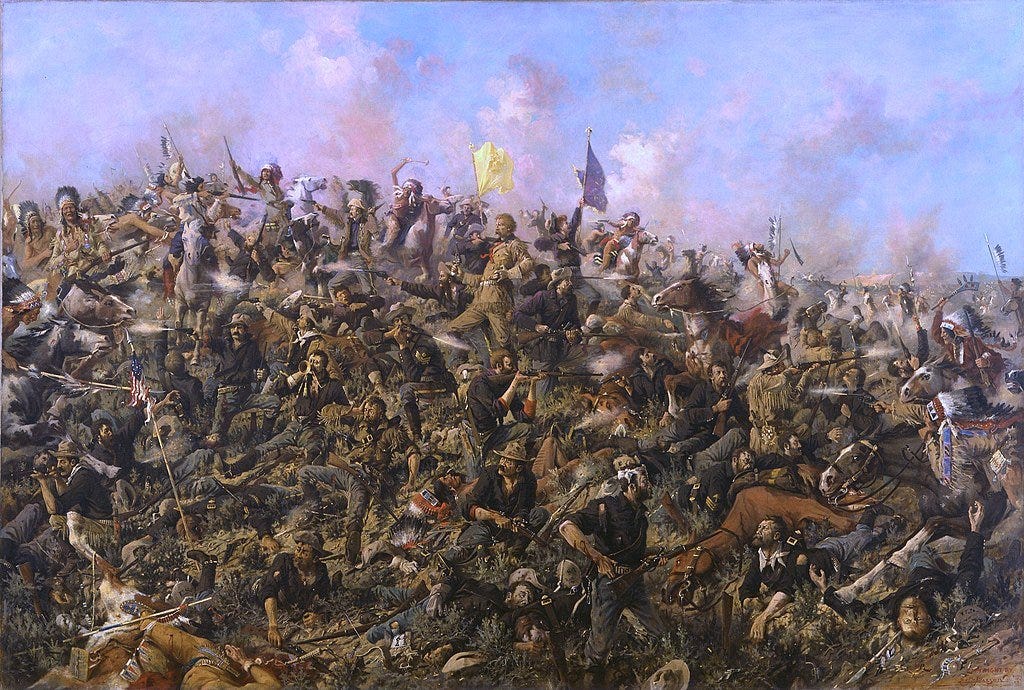
Though never officially adopted by the U.S. Army, preferring instead its various models of single-shot breech-loading Trapdoor Springfield for its powerful .45-70 cartridge instead, and due to institutional Army conservatism, the 1873 with its high volume of fire still saw unofficial service in the Indian Wars. Scouts in Army service, like the Arikara Bloody Knife under Custer, carried them for their advantages in close-quarters skirmishes. Civilians, volunteers, and frontier militias used them heavily in Indian fighting and range wars. At the Battle of the Little Bighorn, Indian warriors used at least 8 of the Model 1873 rifles, playing a not insignificant role in Col. Custer’s crushing defeat. Texas Rangers and state militias equipped patrols with them for the long and savage Comanche Wars in the Southwest, contributing to the eventual defeat of the brutal Indians.
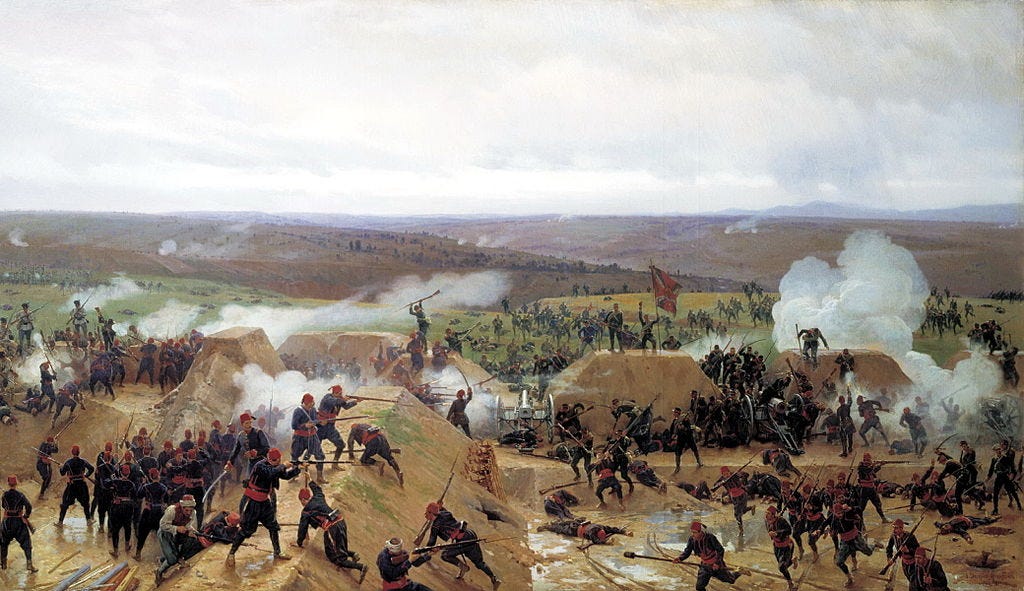
Beyond America’s borders, the various Winchester rifles could be found in countless conflicts. The Ottoman Empire bought 30,000 Model 1866 Winchesters (and a number of 1873s) for use in the 1877-78 Russo-Turkish War, where Winchester-armed Turks stopped Russian assaults dead in their tracks at Plevna. The rapid-fire lever guns completely outmatched their single-shot Russian opponents, delaying advances into the Balkans and sparking European interest in repeaters; at the Siege of Plevna, over 20,000 Russians fell in two attacks alone. In the Boer Wars (both the 1880-81 and 1899-1902 wars), Boer commandos wielded 1873s alongside various Mausers, their familiarity from frontier life making them effective in guerrilla tactics. The rifles became family heirlooms in the South African Veld, in a culture that mirrored the American Old West in many ways. Exports also reached South America and Australia, with some of the long-barreled and bayonet-equipped musket models used by several South American armies in the War of the Pacific.
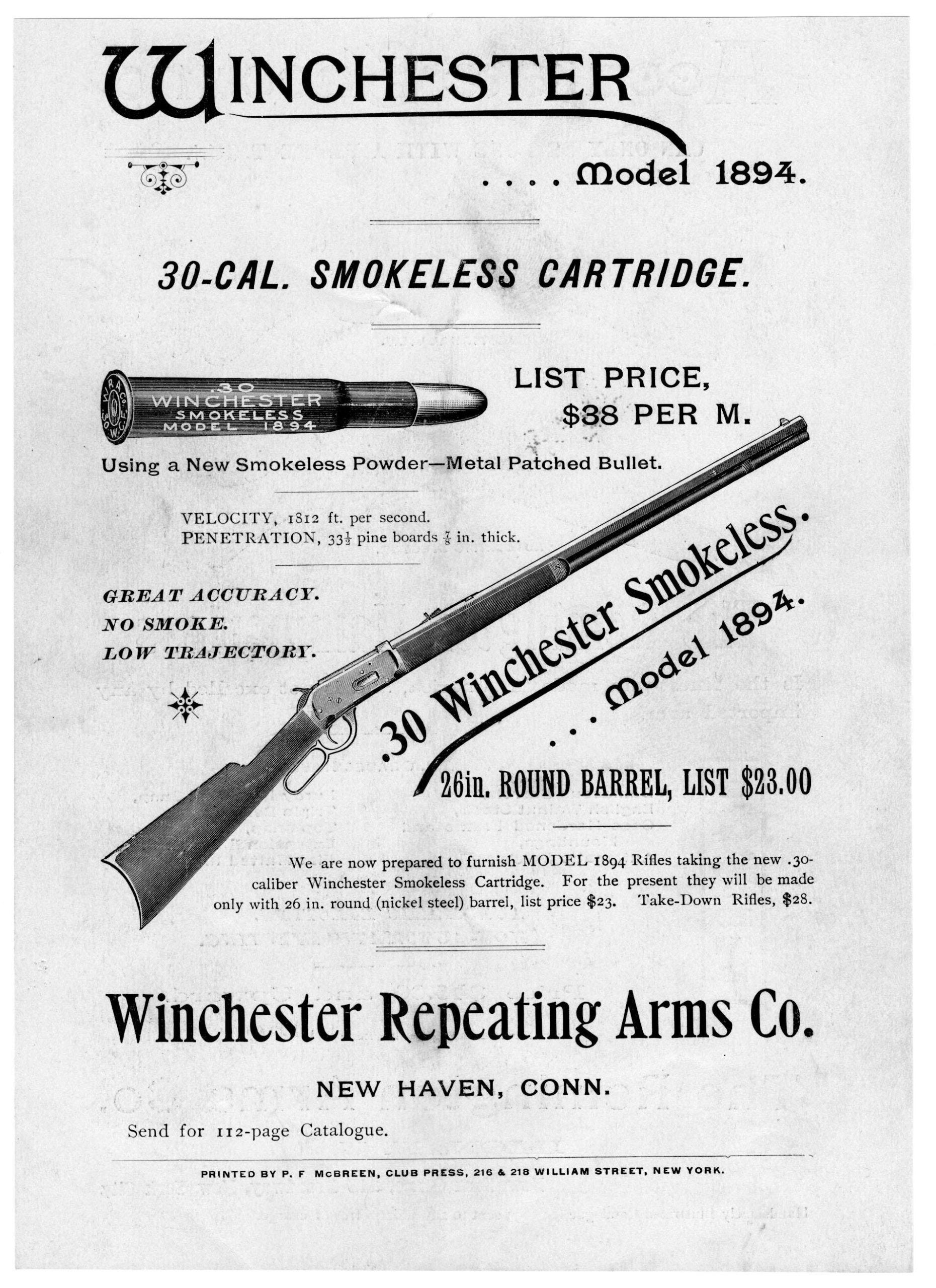
As the 1890s dawned, the 1873 Winchester entered its decline with the rise of stronger and more advanced lever-action designs. John Browning’s Model 1892 provided a more compact and robust action while firing the same calibers as the original 1873. It outsold the older model significantly, with original Winchester production reaching over one million units. Browning then designed his Model 1894, becoming the first civilian sporting rifle in a smokeless cartridge, firing the new.30-30 Winchester (initially called .30 WCF). This new rifle and its smokeless cartridge offered flatter trajectories, higher velocities, and greater effective range compared to black-powder loads, while being significantly cleaner and more convenient. As newer models gained popularity, Winchester reduced prices on the Model 1873 to maintain sales; the standard rifle, originally listed at around $50 in the 1870s, dropped to about $18 by the late 1890s. Despite this, demand gradually waned as bolt-action rifles and semi-automatic designs began to appear alongside the more modern lever-actions. Winchester continued limited production of the Model 1873 until around 1919, after which it was discontinued, having totaled more than 720,000 units manufactured.
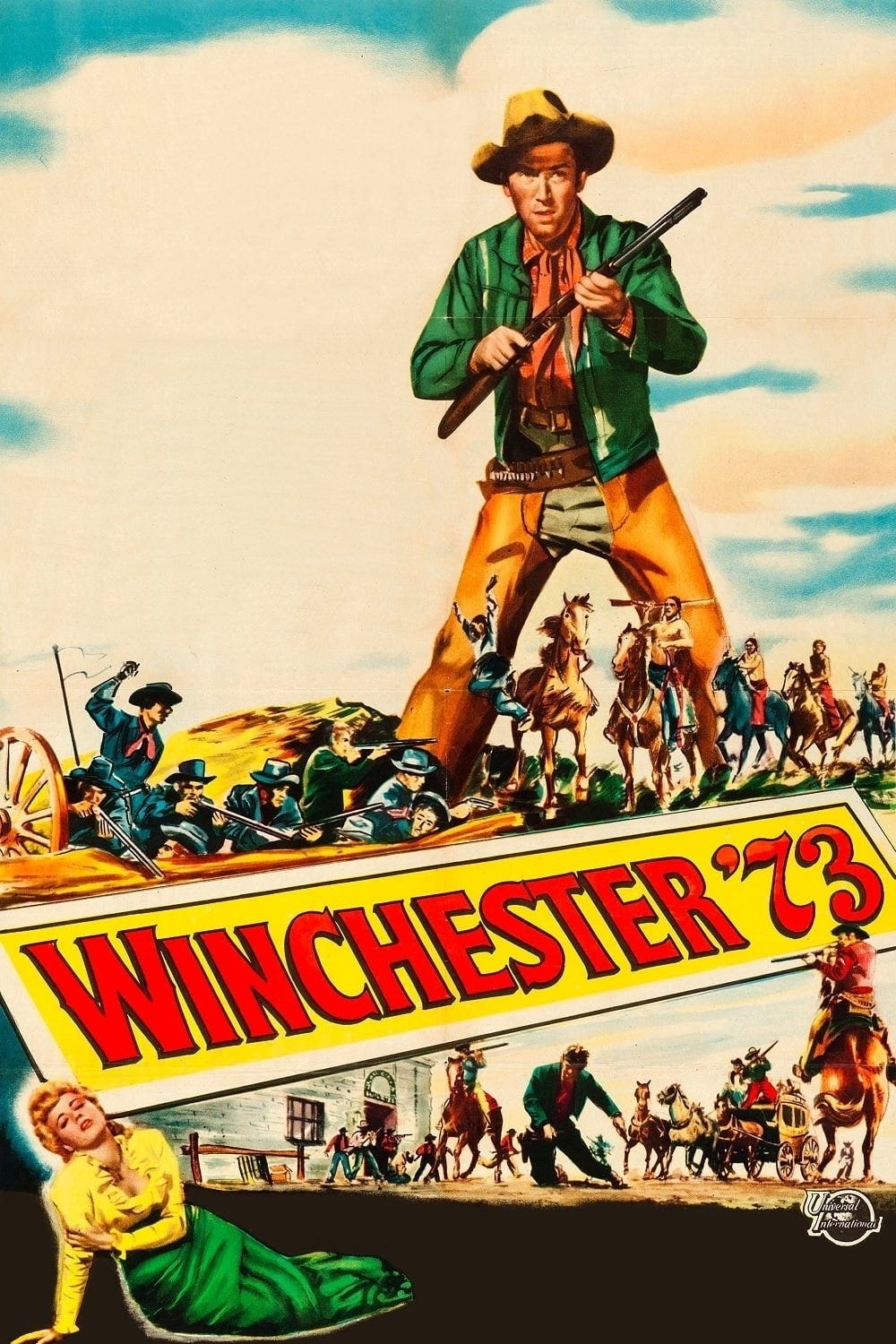
Throughout the 20th century, the Winchester Model 1873 continued to hold prominence in popular culture long after its original production ended, primarily through Hollywood Westerns and related media. The 1950 film Winchester ‘73, starring James Stewart, featured a rare “One of One Thousand” grade Model 1873 rifle as the central plot device. The movie opened with a prologue describing the Winchester as “The Gun that Won the West,” and it helped revive public interest in the rifle, reinforcing its position as an emblem of grit on the frontier. The Winchester also appeared in many other Westerns, such as John Ford’s The Searchers (1956), carried by John Wayne on the big screen, and in the long-running series Gunsmoke, where it was a standard prop for lawmen and outlaws in Dodge City.
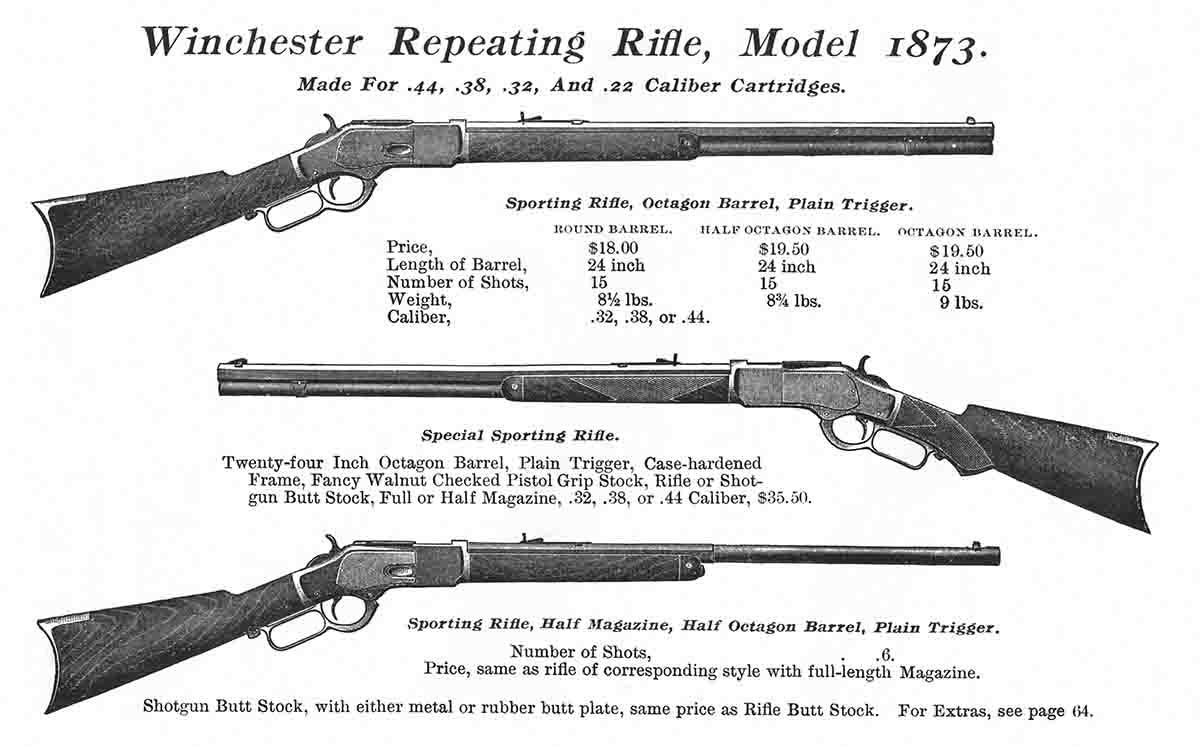
Interest in original Winchester Model 1873 rifles grew among collectors into the 20th century, prizing standard rifles and rare variants alike. To meet rising demand from enthusiasts, reenactors, and shooters, reproductions of the Model 1873 began appearing in the 1960s. Companies such as Uberti in Italy manufactured faithful replicas that quickly gained popularity for cowboy action shooting sports, historical reenactments, and modern civilian sporting use. These reproductions kept the classic design accessible and in active service among enthusiasts into the present day.
Today, the Winchester Model 1873 remains readily available through reproductions from several manufacturers. Uberti produces a variety of 1873 rifle and carbine configurations, offering variants like the Trapper, Short Rifle, and Half Octagonal Barrel Rifle, chambered in traditional calibers like .44-40 as well as modern chamberings like .357 Magnum or even.45 Colt. Companies like Cimarron and Taylor’s & Company import and distribute Uberti 1873 reproductions, emphasizing historical accuracy with a range of models and configurations. Winchester Repeating Arms also manufactures Model 1873 rifles today, including limited editions such as the 150th Anniversary model released in 2023, incorporating high-grade walnut stocks, blued or case-hardened receivers, and chamberings in .44-40 and other calibers.
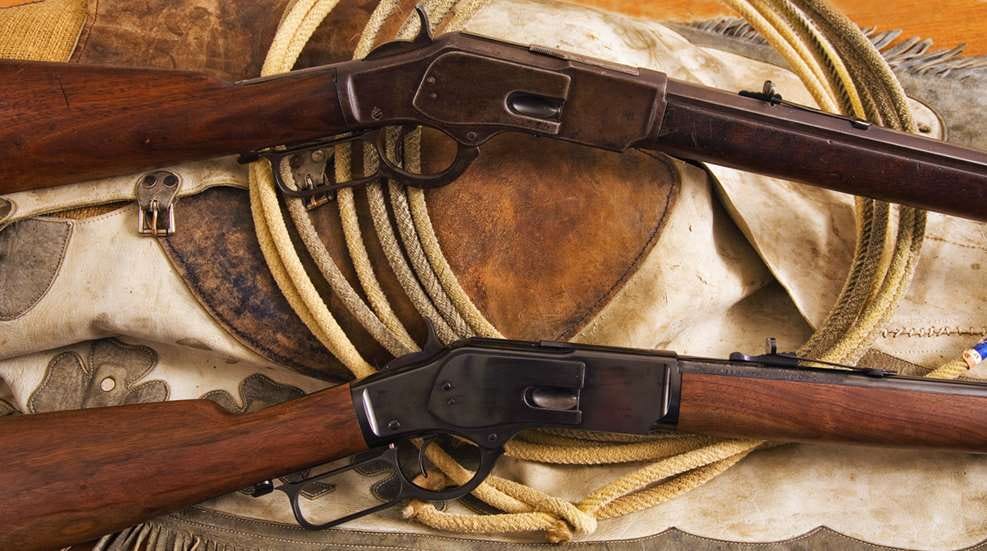
The Winchester Model 1873, “The Gun that Won the West,” remains one of the iconic guns of the Old West. From its introduction in 1873, and with hundreds of thousands made in the next half century, the Winchester 1873 provided rapid, reliable firepower, serving soldiers, settlers, cowboys, lawmen, outlaws, the world over. Its toggle-link action, side-loading gate, and .44-40 cartridge proved rugged and reliable in the harshest conditions, while successive Winchester designs built directly on its foundation and carried the lever-action into the modern era. Though eventually outpaced by more modern designs, the rifle’s legacy persisted through its presence in frontier conflicts, international wars, Hollywood Westerns, collector markets, and modern cowboy action shooting. Today, faithful reproductions by Uberti, Cimarron, Taylor’s & Company, and Winchester itself keep the Model 1873 in active service at ranges and reenactments. More than 150 years after its debut, the Winchester Model 1873 endures as a powerful symbol of ingenuity, self-reliance, and the rugged American spirit.
Let me know your favorite Winchester rifle variant, appearance in film or other media, and dream variant in the comments below. Make sure to like, re-stack, and subscribe to the Nathanael Greene Society and JH Rhodes for more American Guns.